In a world where knowledge flows from one person to another, from one place to another, and even across languages, education becomes the most valuable treasure.
Education is the everyday weapon to combat life’s challenges. It’s the tool that never leaves you once acquired.
In this blog, we’ll explore “Education and Learning” — what education truly means, how learning works, the difference between traditional and digital learning, and which learning style best suits your life. We’ll also discuss how modern education connects directly to career and professional development — so you can check out our detailed guide on that topic here.
What is Education?
“Education is the key to Optimize Growth.”
Education is the systematic process of gaining and applying knowledge. It builds skills, values, beliefs, and habits, and unlocks your potential for critical thinking and innovation.
Education prepares individuals for personal growth, responsible citizenship, and professional success. It boosts confidence, enhances decision-making, and develops personality and life discipline.
Education can be acquired in multiple ways — teaching, coaching, self-analysis, online training, and continuous research.
A person with deep subject knowledge always stands out from others.
“Education is the weapon to overcome barriers in life.”
What is Learning?
Learning is immortal — a never-ending process that continues throughout life. Every day new concepts emerge, and we adapt to them through learning.
Learning means continuously gaining knowledge, improving behavior, and enhancing problem-solving ability. It develops both logical and critical thinking, essential for real-life applications.
Through experience, observation, and instruction, people learn new ideas and refine existing knowledge. Learning brings permanent change in how we think, act, and respond to the world.
True learning doesn’t only come from formal education systems — it also comes from parents, experiences, tools, technology, and real-life situations.
Our ancestors wisely said:
“Learning is easier than its actual implementation.”
Traditional learning is a time-honored approach to learning skills and gaining knowledge. We all went to school, right? In our childhood. Having a lot of books in a bag and hanging that bag on our soft shoulders going to school. Your school is only called traditional learning. It is in-person learning that fosters unity in teaching styles and delivering knowledge.
Schools are the strongest weapon for forming strong foundations in life. There individuals learn many things for the overall development. Every school follows an education system with a defined scheme and syllabus for students of each class. A second-class student cannot understand the class student syllabus which is why students of different age groups are categorized in different classes depending on their age and capability.
What is the need to know this we all know about schools right? But the main reason to tell you all is to make you understand the quote that the first impression is the last impression which is implied here as well.
Traditional Learning
Traditional learning is the classic and time-tested approach — the schooling system we all grew up with. Carrying heavy bags filled with books, attending in-person classes, and learning through direct teacher-student interaction.
This method promotes discipline, social interaction, and personalized guidance. Schools and institutions act as the foundation for mental and emotional development.
Each student learns through a structured curriculum designed according to age and capability. This organized system builds a strong base for higher education and career readiness.
Traditional learning fosters the idea that —
“The first impression is the last impression,”
emphasizing the importance of early education in shaping our entire journey.
Digital Learning
With the evolution of technology, digital learning has transformed the educational landscape.
Digital learning includes online platforms like Coursera, Udemy, YouTube channels, mobile learning apps, and interactive e-courses.
Now, students can learn any topic, anytime, anywhere — from cloud computing to art, all within minutes. It removes the need for physical coaching and allows flexibility and self-paced study.
The advantage of digital learning is accessibility — multiple resources, various instructors, and diverse materials are available at one click.
Technology has made learning faster, more engaging, and more interactive, turning education into an on-demand experience.
Which Learning Method is Better for You?
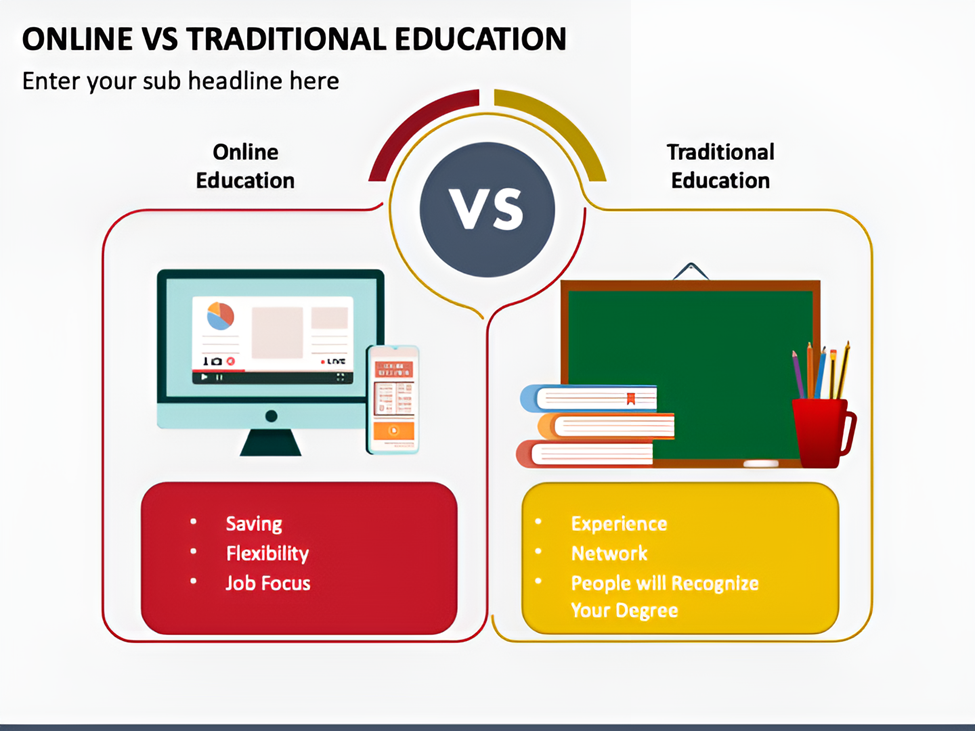
Both traditional and digital learning have their advantages. The right choice depends on your personal preference and lifestyle.
- If you enjoy face-to-face interaction, prefer books, and want classroom discipline — Traditional Learning suits you best.
- If you’re more comfortable using digital devices, enjoy flexibility, and love exploring multiple online sources — go for Digital Learning.
The key is not to compare, but to combine — choose what works best for your comfort and career goals.
Learning should never stop, regardless of the medium. Whether you use pen and paper or a tablet and stylus — the goal is continuous improvement.
“Learning should never stop — the medium is just the method.”
Embracing the Future of Education
Education in the 21st century is deeply connected with technology. From virtual classrooms to AI-based learning tools, the way we gain knowledge has completely changed.
Now, education involves interactive online sessions, AI tutors, discussion forums, community-based learning, and even chatbots for quick answers.
The future of education is blended learning — a mix of traditional and digital methods to create the most effective and flexible learning experience.
Modern education not only focuses on knowledge but also on skill development, career readiness, and global learning opportunities.
For example, while education builds the foundation, applying those learnings to build a career is equally important. You can learn more about this connection in our related article — Why Only 30% of People Get Employment While 70% Fail?
Conclusion
Both education and learning play vital roles in shaping a person’s success. Education gives you the foundation, and learning helps you grow continuously.
These two processes run parallel throughout life, determining whether a person thrives or stagnates.
Remember — incomplete knowledge can mislead, but complete learning empowers.
We hope this blog helped you understand education, learning, and their evolving forms. Always stay curious, keep learning, and adapt to change — because growth never stops for a true learner.
You can share your thoughts in the comments below —
💬 How have education and learning shaped your personal or professional journey?
Frequently Asked Questions (SEO Section)
Q1. What is the main difference between education and learning?
Education is a structured system of gaining knowledge, while learning is a lifelong process that goes beyond formal schooling.
Q2. Which learning is better – traditional or digital?
Both have unique benefits. Traditional learning encourages interaction, while digital learning offers flexibility and convenience.
Q3. How does technology improve learning?
Technology provides access to global resources, online courses, and interactive study materials that enhance understanding.
Q4. Why is education important for success?
Education builds knowledge, discipline, and confidence — all necessary for personal and professional development.
Q5. How are education and career development connected?
Education builds the base, while professional development applies those learnings in real-life scenarios for success. (Read more here)