


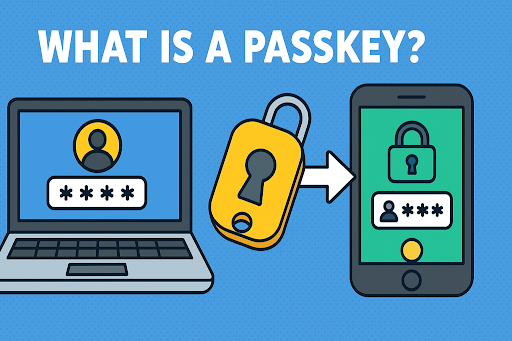
For many years, passwords have been the main way people log into websites and apps. However, passwords also create many problems such as hacking, phishing attacks, and forgotten credentials. Because of these issues, technology companies are now moving toward a new login method called Passkeys.
Passkeys are a modern authentication technology that allows users to sign in to websites and apps without typing a traditional password. Instead, they use biometric authentication like fingerprints, face recognition, or a device PIN.
Major technology companies are now supporting passkeys, and experts believe that this technology could replace passwords in the near future.
In this guide, you will learn what passkeys are, how they work, their advantages, and why they are becoming the future of online security.
What Are Passkeys?
A passkey is a secure digital credential that allows users to log into an account without entering a password. It uses public-key cryptography to verify a user’s identity.
Instead of storing a password on a server, passkeys store a secure key on your device such as your smartphone or computer.
When you log into a website, your device confirms your identity using biometrics or a device lock. This means you do not need to remember or type any password.
Passkeys are designed to be more secure and easier to use than traditional passwords.
Why Passwords Are Becoming Outdated
Passwords have been used for decades, but they come with several security risks.
1. Weak Passwords
Many users create simple passwords such as:
- 123456
- password
- qwerty
These passwords are very easy for hackers to guess.
2. Password Reuse
Many people use the same password for multiple accounts. If one website gets hacked, attackers may gain access to many other accounts.
3. Phishing Attacks
Cybercriminals often trick users into entering their passwords on fake websites. Once the attacker gets the password, they can access the real account.
4. Password Management Problems
Users often forget their passwords, which leads to frequent password reset requests.
Because of these problems, security experts have been looking for safer alternatives, which led to the development of passkeys.
How Passkeys Work
Passkeys use a technology called public-key cryptography. This system uses two keys:
- Public Key
- Private Key
Here is how the process works.
Step 1: Account Creation
When you create an account on a website that supports passkeys, your device generates two cryptographic keys.
- The public key is stored on the website server.
- The private key is stored securely on your device.
Step 2: Login Request
When you try to log into the website, the server sends a challenge to your device.
Step 3: Identity Verification
Your device verifies your identity using:
- Fingerprint
- Face recognition
- Device PIN
Step 4: Authentication
The device uses the private key to sign the challenge and sends the response to the server.
The server verifies it using the stored public key and grants access.
Because the private key never leaves your device, attackers cannot steal it from the server.
Advantages of Passkeys
Passkeys provide several important benefits compared to traditional passwords.
1. Strong Security
Passkeys are resistant to phishing attacks because users never type a password on a website.
Even if someone creates a fake login page, the passkey will not work.
2. No Passwords to Remember
One of the biggest advantages is convenience. Users no longer need to remember complicated passwords.
You simply use your fingerprint or face to log in.
3. Protection Against Data Breaches
In traditional systems, websites store password hashes on their servers. If hackers access the database, they may crack these passwords.
With passkeys, only a public key is stored on the server, which cannot be used to log in.
4. Faster Login Experience
Passkeys make login faster. Instead of typing usernames and passwords, users can authenticate instantly with biometrics.
This improves the overall user experience.
5. Cross-Device Synchronization
Many devices allow passkeys to sync securely across devices through encrypted cloud storage.
For example, a passkey created on your phone can also be used on your laptop.
Where Passkeys Are Already Used
Many popular platforms have already started supporting passkeys.
Some examples include:
- Google accounts
- Apple ID
- Microsoft accounts
- GitHub
- PayPal
Many websites and apps are gradually adding support for passkeys to improve security.
Passkeys vs Passwords
| Feature | Passwords | Passkeys |
|---|---|---|
| Security | Vulnerable to phishing | Phishing resistant |
| User Experience | Need to remember passwords | Biometric login |
| Data Breach Risk | High | Very low |
| Login Speed | Slower | Faster |
| Password Reset | Required often | Not required |
Passkeys clearly offer better security and convenience.
Are Passkeys Completely Safe?
Passkeys are much safer than passwords, but no technology is completely perfect.
Some potential concerns include:
Device Loss
If you lose your device, you may temporarily lose access to your passkeys. However, most platforms allow recovery through other trusted devices.
Device Compatibility
Older devices may not support passkey authentication.
User Awareness
Some users are still unfamiliar with passkeys and may take time to adopt this technology.
Despite these limitations, passkeys are considered one of the safest authentication systems available today.
How to Set Up Passkeys
Setting up passkeys is usually very simple.
Step 1
Open the security settings of your account.
Step 2
Look for the Passkeys or Passwordless Login option.
Step 3
Choose Create Passkey.
Step 4
Verify your identity using fingerprint, face recognition, or device PIN.
Once created, your passkey will be saved on your device and used for future logins.
The Future of Passwordless Authentication
Technology experts believe that passwords will gradually disappear in the coming years.
Passkeys offer a safer and simpler way to authenticate users online. As more companies adopt this technology, passwordless login will likely become the new standard for digital security.
In the future, users may log into most websites using biometrics or secure devices instead of remembering dozens of passwords.
Conclusion
Passkeys are a modern authentication technology designed to replace traditional passwords. They provide stronger security, faster login experiences, and protection against phishing attacks.
With support from major technology companies, passkeys are becoming an important part of the future of online security.
As more websites and apps adopt this system, users will enjoy a safer and more convenient way to access their digital accounts.
FAQ
A passkey is a password-free login method that allows users to sign into websites using biometrics like fingerprints or face recognition.
Yes, passkeys are generally safer because they cannot be stolen through phishing or database leaks.
Can passkeys replace passwords completely?
Most modern smartphones, laptops, and browsers support passkeys, but very old devices may not.